
A high-tech financial exchange trading floor with digital sc
Technical Directory

ETF Instruments and Structure

An engineering perspective on Exchange Traded Funds within the Singapore Exchange (SGX) framework, analyzing the evolution from collective investment schemes to modern algorithmic indexing.

Information Protocol

Frequently Asked Questions

How are SGX ETFs physically structured?

Most ETFs in Singapore utilize physical replication, meaning the fund manager purchases the actual underlying securities of the index. This structure reduces counterparty risk compared to synthetic ETFs, which use derivatives like swaps to track performance. The evolution of this preference in the Singapore market stems from a demand for transparency and direct asset ownership.

What is the role of the Authorized Participant (AP)?

APs are institutional entities, typically large banks, that have the exclusive right to create and redeem ETF units. They manage the primary market liquidity by exchanging baskets of stocks for fund shares, ensuring that the ETF price remains closely aligned with its Net Asset Value (NAV).

Does SGX support ESG-focused ETFs?

Currently, the SGX Invest Guide highlights a significant transition toward sustainability-linked instruments. Several indices now focus on low-carbon footprints and governance metrics, reflecting the modern shift in global institutional capital allocation.

Comparative Advantages

Instrument Benefits

Immediate Diversification

By purchasing a single unit of the STI ETF, an investor gains exposure to the 30 largest companies in Singapore. This evolutionary leap from individual stock picking reduces unsystematic risk through a single trade entry.

Cost Efficiency

Modern ETFs operate with significantly lower expense ratios compared to actively managed funds. The automated nature of index tracking eliminates the need for expensive research departments, passing the savings to the end user.

Intraday Liquidity

Unlike unit trusts that are priced once a day, ETFs trade on the SGX continuously throughout the session. This provides the flexibility to enter or exit positions at real-time market prices, a crucial advancement in Historical Risk Analysis.

Section: STI ETF History

The Evolution of the Straits Times Index

The transition of the Straits Times Index (STI) from a simple market barometer to a tradeable ETF instrument began in the early 2000s. Originally calculated by the Straits Times newspaper, the index evolved into a sophisticated joint venture between SGX, FTSE, and SPH. This transition allowed retail investors to mirror the performance of Singapore's economic pillars—banks like DBS, industrial giants like Keppel, and real estate leaders like CapitaLand—through a single ticker.

Historically, the STI has been the definitive benchmark for the Singapore equity market. The development of the SPDR® STI ETF and the Nikko AM Singapore STI ETF provided the necessary infrastructure for institutional and retail capital to flow into a diversified basket of assets without the friction of multiple transaction fees.

  • 2002: Launch of the first STI-linked Exchange Traded Fund.
  • 2008: Formalization of FTSE ground rules for index inclusion.
Modern Singapore skyline at dusk, focusing on financial dist
Fig. 1: The physical landscape of the SGX-listed corporations forming the STI core.
Stay in the loop

Subscribe to be the first to know.

Section: REIT ETF Mechanics

Real Estate Investment Trust ETFs

REIT ETFs are a specialized instrument on the SGX that aggregate multiple Real Estate Investment Trusts into a single fund. This structure is particularly relevant in Singapore, which is recognized as a global hub for REITs (S-REITs). The mechanic involves the fund manager collecting dividends from the underlying property trusts and distributing them to ETF holders, providing a yield-focused investment vehicle.

Understanding the SGX Operational Mechanics is vital for REIT ETF investors, as these funds undergo semi-annual rebalancing to ensure they adhere to strict concentration limits. This prevents any single REIT from dominating the portfolio, thereby maintaining the diversification integrity of the instrument.

40+
Listed S-REITs
Quarterly
Typical Yield Dist.
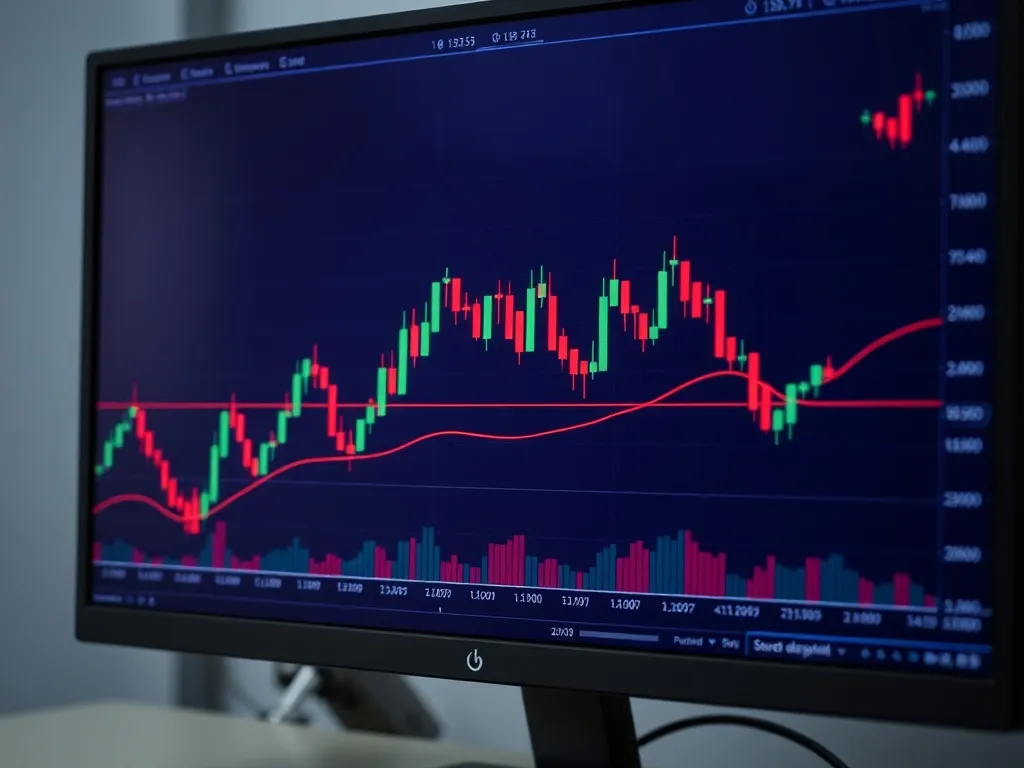
Professional financial candlestick chart on a dark monitor,
Section: Tracking Error Data

Performance Deviation and Tracking Error

Tracking error is the quantification of the divergence between the price behavior of an ETF and the price behavior of its underlying benchmark index. In the context of SGX ETFs, this deviation is often caused by management fees, transaction costs during rebalancing, and the timing of dividend reinvestments. An engineer or professional analyst views tracking error as a metric of fund efficiency: the lower the error, the more accurately the manager is replicating the target index.

Another critical metric is the "Tracking Difference," which measures the total underperformance or overperformance over a specific period. While tracking error focuses on volatility of the difference, tracking difference focuses on the absolute gap. For Singaporean investors, evaluating these metrics is essential to understand the "hidden" costs of index investing beyond the stated expense ratio.

Factor Impact on Tracking Mitigation Strategy
Expense Ratio Constant negative drag Securities lending revenue
Cash Drag Delayed reinvestment Futures overlay
Dividend Tax Withholding leakage Tax-efficient domicile

Ready to Analyze SGX Instruments?

The evolution of Singapore finance offers a robust environment for ETF growth. Explore our technical guides to understand the regulatory and operational frameworks of the local market.